
How to Maintain Component Quality During Long-Term Storage
Best Practices for Protecting Electronic Components During Extended Storage
For OEMs, manufacturers, and industrial buyers, maintaining the quality of electronic components during long-term storage is crucial. Components like capacitors, resistors, connectors, ICs, switches, and transistors can degrade over time if not stored under proper conditions. This affects production reliability, product performance, and overall cost efficiency.
Why Long-Term Storage Quality Matters
Electronic components are sensitive to humidity, temperature fluctuations, oxidation, and electrostatic discharge. Poor storage conditions can lead to corrosion, moisture absorption, lead oxidation, or reduced electrical performance — all of which can compromise your final product.
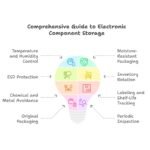
1. Control Temperature and Humidity
Environmental control is the most important factor in component storage. Ideally:
- Temperature: 15°C – 27°C
- Humidity: Below 60% (40% recommended)
High humidity can cause oxidation on leads, while high temperatures may reduce the shelf life of electrolytic capacitors and semiconductors.
2. Use Moisture-Resistant Packaging
Store components in:
- Moisture barrier bags
- Vacuum-sealed packs
- Bubble-wrapped reels or trays
This prevents moisture absorption and protects sensitive components like SMD capacitors, ICs, and connectors.
3. Protect Components from ESD (Electrostatic Discharge)
ESD can damage ICs, MOSFETs, microcontrollers, and other semiconductors even when not in use. Always use:
- Anti-static bags
- ESD-safe racks
- Grounded storage shelves
4. Rotate Inventory Regularly (FIFO Method)
Using the First-In, First-Out method ensures older components are used first. This prevents aging and reduces the risk of storing components beyond their optimal shelf life.
5. Avoid Storing Near Chemicals or Metals
Chemicals, fumes, oils, or reactive metals can cause oxidation or corrosion. Always store electronic components in a clean, dry, and chemical-free environment.
6. Use Labeling and Shelf-Life Tracking
Each box or reel should have:
- Manufacture date
- Batch number
- Shelf-life information
- Component specifications
This prevents mix-ups and ensures quality traceability.
7. Store in Original Packaging When Possible
Manufacturers provide optimized packaging to ensure component safety. Keeping components sealed in their original manufacturer or distributor packaging protects them from dust, moisture, and ESD.
8. Inspect Stored Components Periodically
Routine checks help identify issues early. Check for:
- Corroded or oxidized leads
- Damaged tapes or reels
- Moisture buildup
- Broken packaging seals
How DDS International – Edzeal Ensures Component Quality
At DDS International – Edzeal, we maintain strict storage and packaging standards to ensure every component — whether capacitors, resistors, switches, connectors, or ICs — reaches you in perfect condition. Our warehouse maintains controlled temperature, humidity, and ESD-safe procedures for all OEM-grade components.
Conclusion
Maintaining the quality of electronic components during long-term storage is critical for ensuring reliable production, reducing failures, and optimizing cost efficiency. With the right environment, packaging, and handling practices—and by sourcing from trusted distributors like DDS International – Edzeal—your stored components can remain in excellent condition for years.
What to read next
-
By EDZEAL | November 12, 2025
How Price Fluctuations in Electronic Components Impact OEM Production Planning
In the fast-moving electronics industry, price stability is a rare luxury. Component prices can fluctuate due to global shortages, material costs, currency shifts, and geopolitical factors. For OEMs, these price changes can significantly affect production planning, costing, and delivery schedules. Understanding how to manage and respond to these fluctuations is critical to maintaining profitability and operational stability.
-

By EDZEAL | November 10, 2025
How AI and Automation Are Changing the Electronics Industry
The electronics industry is undergoing a major transformation. Artificial Intelligence (AI) and automation are no longer futuristic concepts — they are driving real change across manufacturing, design, testing, and supply chain management. For OEMs and industrial manufacturers, adopting these technologies means faster production, fewer errors, and improved product quality.
-

By EDZEAL | November 8, 2025
How to Build a Reliable Supply Chain for Electronic Components
In today’s fast-paced electronics industry, a reliable supply chain is no longer optional — it’s a competitive necessity. For OEMs, manufacturers, and industrial buyers, supply chain disruptions can lead to production delays, cost overruns, and loss of customer trust. Building a strong and resilient component supply chain ensures consistent production, quality assurance, and long-term business growth.