edzeal

Active and Passive Components in Electronics  Simple Explanation

Look around your home and you will see many devices like fans, TVs, washing machines, phones, and lights. Each of these has a small electronic circuit inside that helps it work. A circuit is just a closed path for electricity to move.

To build this path we use tiny parts called electronic components. Every device from a torch to a smartphone uses many of these parts. Some give energy; some only store or control it. All parts can be placed in two main groups: active and passive. If you understand this simple difference, electronics becomes much easier to learn.

Read More
Leave a comment
edzeal

Capacitors in Electronics: Meaning of Capacitance, SI Unit & Real-World Uses

Capacitors are fundamental building blocks in electronics. From stabilizing power supplies to filtering noise and enabling wireless communication, they are everywhere. To understand capacitors, we need to first answer: what is capacitance?

What is Capacitance?

Capacitance is the ability of a component or circuit to store electrical energy in an electric field. In simple terms, it is the measure of how much charge a capacitor can hold at a given voltage.

Read More
Leave a comment
edzeal

How to Select the Right Resistor: Types Tolerances & OEM Insights

What Is a Resistor?

A resistor is a two-terminal passive component that opposes current flow. By converting electrical energy to heat, it stabilizes voltages, limits current, and shapes signals. Its value is measured in ohms (Ω), with common series like E6, E12, and E24 providing standard increments for design.

Core Functions in Real Circuits

Current Limiting: Protect LEDs, ICs, and sensors from overcurrent.

Voltage Division: Create reference levels for ADCs, comparators, and bias networks.

Bias & Stability: Set operating points in transistor and op-amp stages.

Filtering & Timing: Combine with capacitors/inductors for RC time constants and signal conditioning.

Sense & Feedback: Low-ohm shunts measure current for control loops.

Tip: For precision dividers, match temperature coefficients (TCR) and use tight tolerance pairs to maintain ratio accuracy over temperature.

Read More
Leave a comment
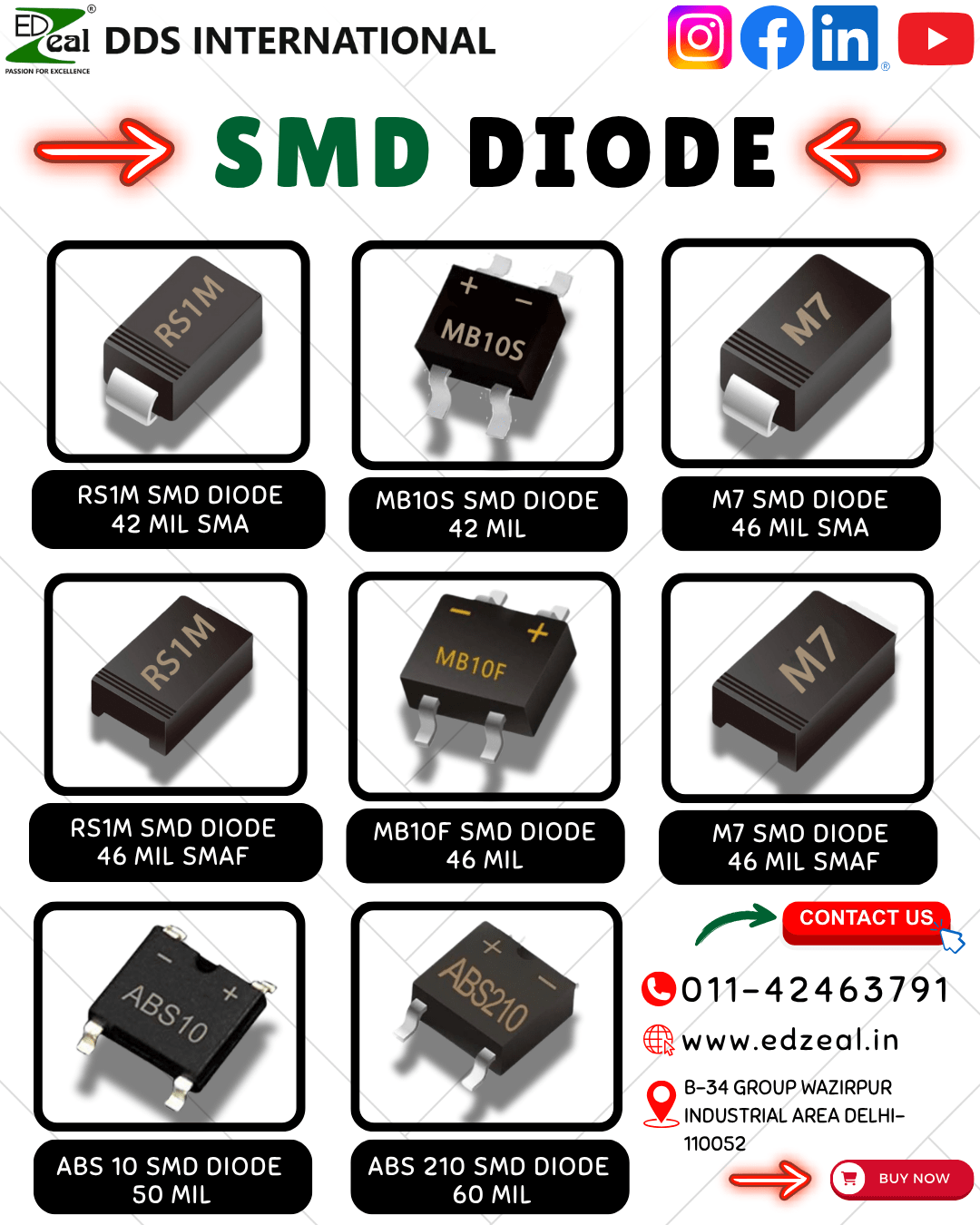
Diode working principle and types explained with examples

Understanding Diodes: Types, Functions & Real-World Uses

Introduction

Diodes are among the most widely used components in electronics. They act like one-way valves for current, enabling rectification, voltage regulation, protection from transients, signal detection, and even light emission. Whether you’re building a charger, an inverter, or a microcontroller-based product, understanding diodes helps you design safer, more efficient circuits.

Definition: What Is a Diode?

A diode is a two-terminal semiconductor device formed by joining P-type and N-type materials to create a PN junction. Current flows readily from the anode to the cathode in forward bias, and is blocked in reverse bias. This directional control of current is the basis for rectifiers, reverse-polarity protection, and more.

Read More
Leave a comment
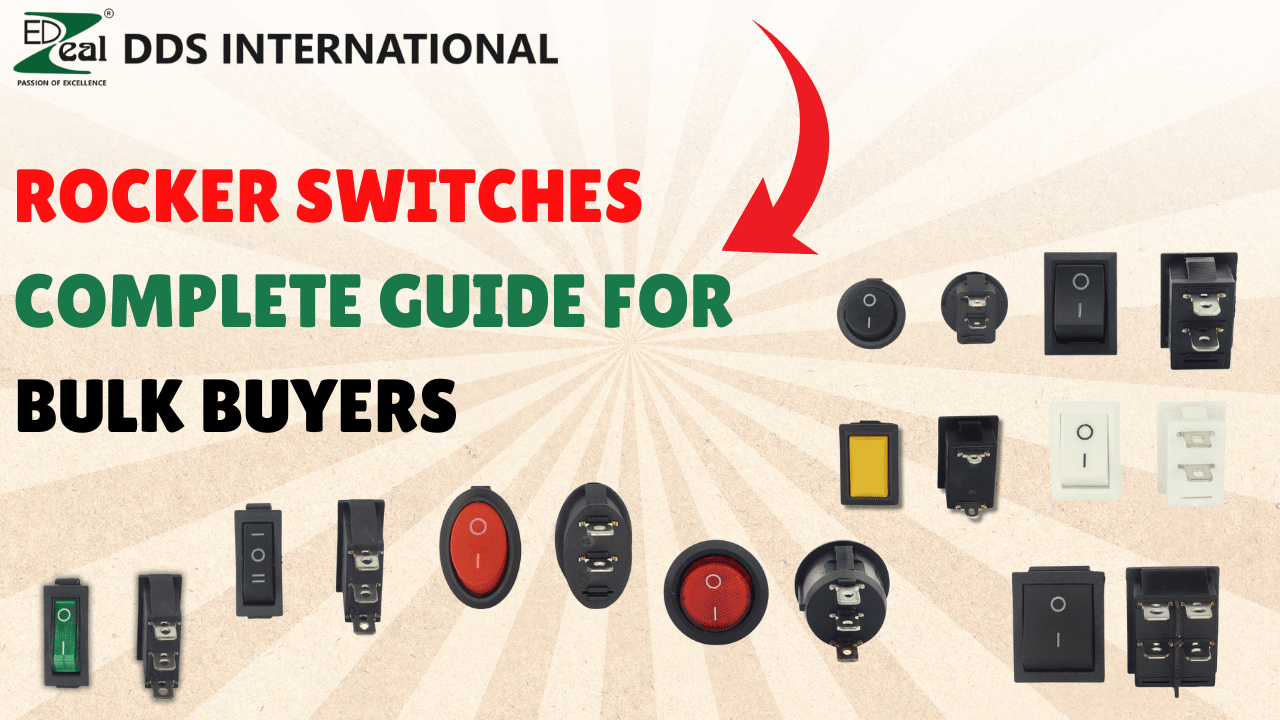
High-quality industrial rocker switches for OEM applications

Rocker Switches: Complete Guide for OEMs & Bulk Buyers

In the world of electronics manufacturing, rocker switches have become one of the most widely used and trusted components. They provide simple, reliable ON/OFF control, are available in various configurations, and are durable enough to withstand years of use. Whether you’re manufacturing consumer electronics, industrial machinery, or automotive products, rocker switches are a vital choice for many Original Equipment Manufacturers (OEMs).

What is a Rocker Switch?

A rocker switch is a type of electrical switch that rocks back and forth to open or close a circuit. When pressed on one side, the switch connects the circuit, and when pressed on the other, it disconnects it. They are named for the rocking motion that occurs when toggling between positions.

Key Advantages of Rocker Switches for OEMs

Durability: Built to last through thousands of switching cycles.

Easy Operation: Simple press action, making it user-friendly.

Design Versatility: Available in illuminated, waterproof, and multi-position types.

Compact Size: Fits into small panels without compromising performance.

Cost-Effective: Affordable even for large-scale production runs.

Read More
Leave a comment

High-Temperature Capacitors for Industrial Applications | DDS International-Edzeal

Introduction
In modern industrial electronics, components must survive extreme heat, heavy loads, and long operating hours. High-temperature capacitors are engineered to maintain stable performance in these demanding environments — making them essential for inverters, motor controllers, automotive modules, and industrial SMPS systems.

What are High-Temperature Capacitors?

High-temperature capacitors are specialized capacitors rated to operate reliably at elevated temperatures (commonly 105°C and sometimes up to 150°C+). They use robust electrolytes, improved sealing, and durable casing to resist thermal degradation and retain capacitance and low ESR under stress.

Read More
Leave a comment
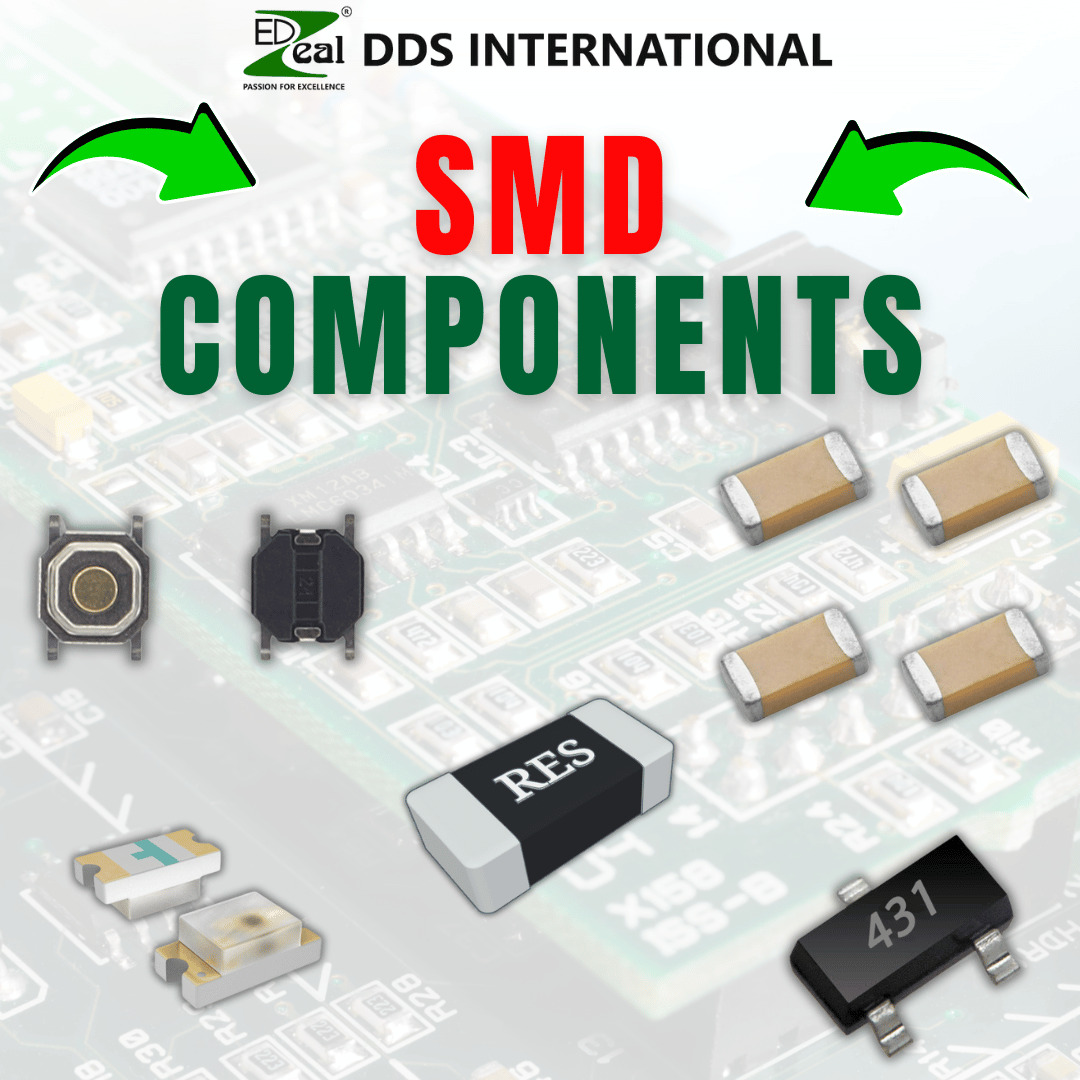
Various SMD electronic components on a PCB

SMD Components: Benefits, Types & Why They’re the Future

What are SMD Components?

SMD (Surface Mount Device) components are compact electronic parts that are mounted directly onto the surface of Printed Circuit Boards (PCBs). Unlike traditional through-hole components, SMDs eliminate the need for drilling, offering faster assembly and greater space efficiency.
Key Advantages of SMD Components

Compact Size – Perfect for modern miniaturized gadgets like smartphones and wearables.

Faster Assembly – Ideal for automated manufacturing and pick-and-place machines.

Better Performance – Improved signal integrity at higher frequencies.

Energy Efficient – High performance in a smaller form factor.

Cost Effective – Lower material, space, and labor costs for bulk production.

Common Types of SMD Components

SMD Resistors

SMD Electrolytic Capacitors – JWCO, Edzeal

SMD Ceramic Capacitors – Edzeal

SMD Diodes & Transistors

SMD LEDs

ICs in SMD Packages (QFN, SOIC, etc.)

Read More
Leave a comment
Illustration Explaining ESR (Equivalent Series Resistance) in Capacitors

What is ESR in Capacitors and Why It Affects Circuit Performance

When selecting capacitors for electronic circuits, one critical factor that often gets overlooked is ESR – Equivalent Series Resistance. ESR directly impacts the efficiency, heat generation, and overall reliability of your circuit, especially in high-frequency and power applications. In this blog, we’ll break down what ESR is and why it’s important to consider when buying capacitors.

What is ESR in Capacitors?

Equivalent Series Resistance (ESR) is the internal resistance that appears in series with the ideal capacitance of a capacitor. It represents the resistive losses within the capacitor and is measured in ohms (Ω).

Why is Low ESR Important?

Improved Efficiency: Lower ESR means less power is wasted as heat, making circuits more energy-efficient.

Better High-Frequency Response: Low ESR capacitors maintain stability and filtering capability at high frequencies.

Reduced Heat Generation: Lower ESR reduces internal heating, extending the capacitor’s lifespan.

Essential for SMPS and Motherboards: Switching power supplies and high-performance motherboards require low ESR capacitors to handle rapid voltage changes.

Read More
Leave a comment
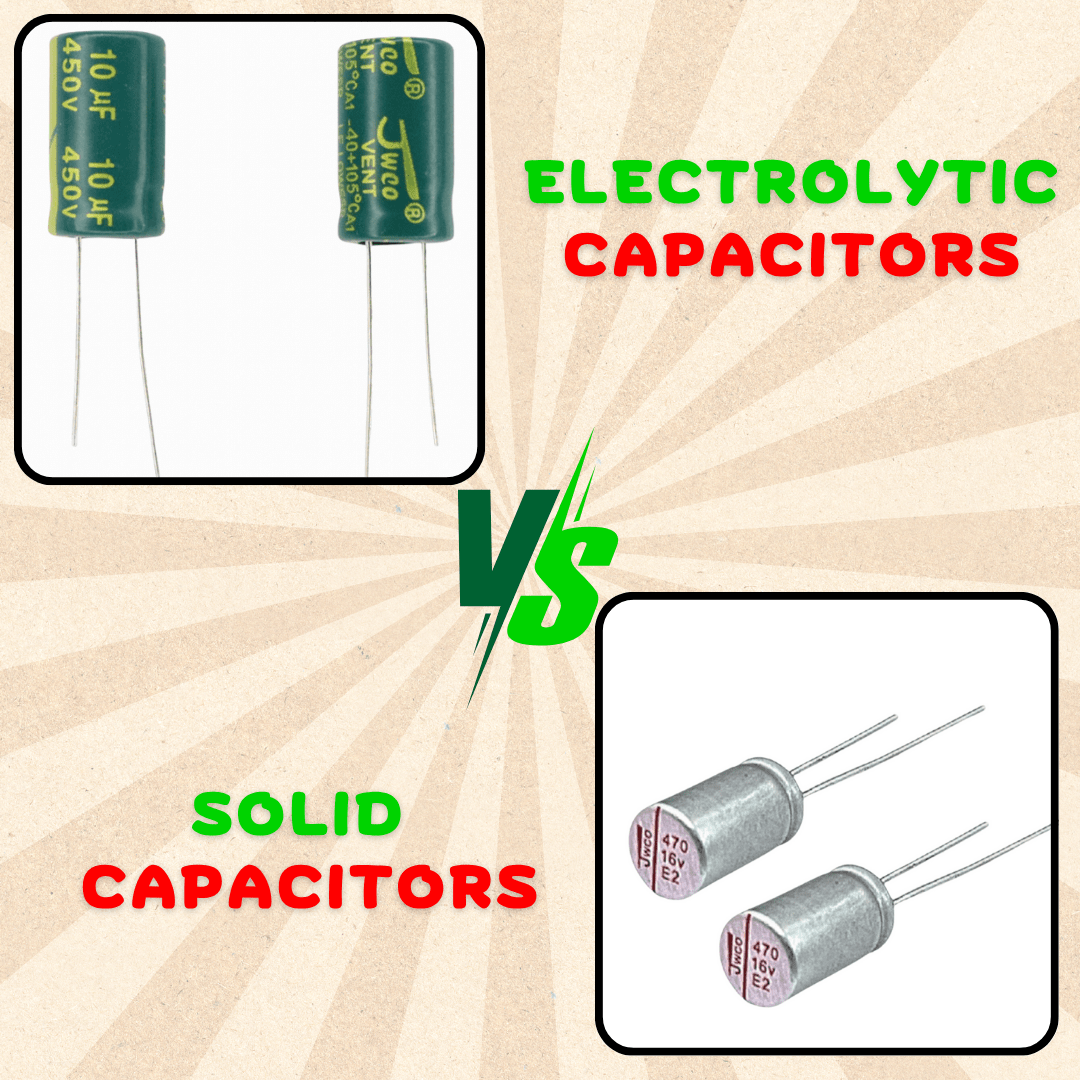
Comparison Between Electrolytic and Solid Capacitors

Electrolytic vs Solid Capacitors – Which Type is Right for Your Circuit?

Choosing between electrolytic capacitors and solid capacitors can impact the reliability and efficiency of your electronic design. Both types have unique properties, advantages, and applications. In this blog, we’ll explain the key differences and help you decide which capacitor suits your project best.

What are Electrolytic Capacitors?

Electrolytic capacitors are polarized capacitors that use a liquid electrolyte to achieve high capacitance values. They are commonly used in power supply circuits, audio devices, and filtering applications due to their affordability and wide capacitance range.

Advantages of Electrolytic Capacitors:

High capacitance in a compact size

Low cost and widely available

Ideal for low-frequency applications

Read More
Leave a comment
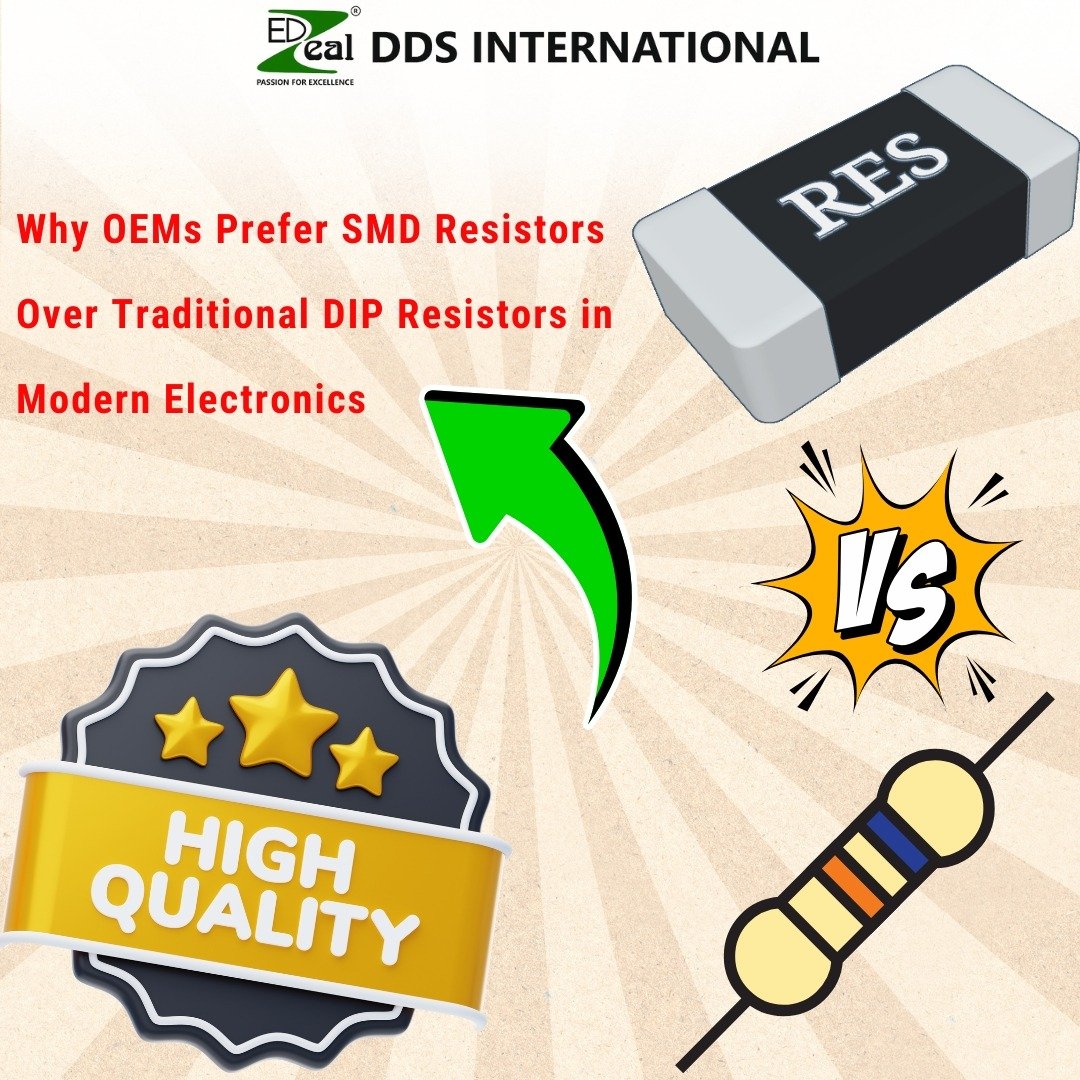
SMD Resistors vs DIP Resistors in Electronics Manufacturing

Why SMD Resistors Are Replacing DIP Resistors in Modern Electronics – A Must-Know for OEMs

As electronic devices become smaller and more powerful, component selection is crucial for achieving compact, efficient designs. One of the biggest shifts in the electronics industry is the move from traditional DIP (Through Hole) resistors to SMD (Surface Mount Device) resistors. In this article, we explore why OEMs prefer SMD resistors and how they are shaping modern electronics.

1. Space-Saving Design

SMD resistors are significantly smaller than DIP resistors, making them ideal for high-density circuit boards where space is at a premium. Their compact footprint allows OEMs to design sleek and lightweight products.

2. Faster Automated Assembly

Surface mount technology (SMT) allows automated machines to place SMD resistors quickly and accurately, improving manufacturing efficiency and reducing labor costs compared to manual DIP soldering.

3. Improved Electrical Performance

SMD resistors offer lower inductance and better high-frequency performance, which is essential for modern applications like smartphones, wearables, and IoT devices.

Read More
Leave a comment