
No products in the cart.
How AI and Automation Are Changing the Electronics Industry
The Future of Electronics: How AI and Automation Are Transforming the Industry
The electronics industry is undergoing a major transformation. Artificial Intelligence (AI) and automation are no longer futuristic concepts — they are driving real change across manufacturing, design, testing, and supply chain management. For OEMs and industrial manufacturers, adopting these technologies means faster production, fewer errors, and improved product quality.
Understanding the Role of AI in Electronics
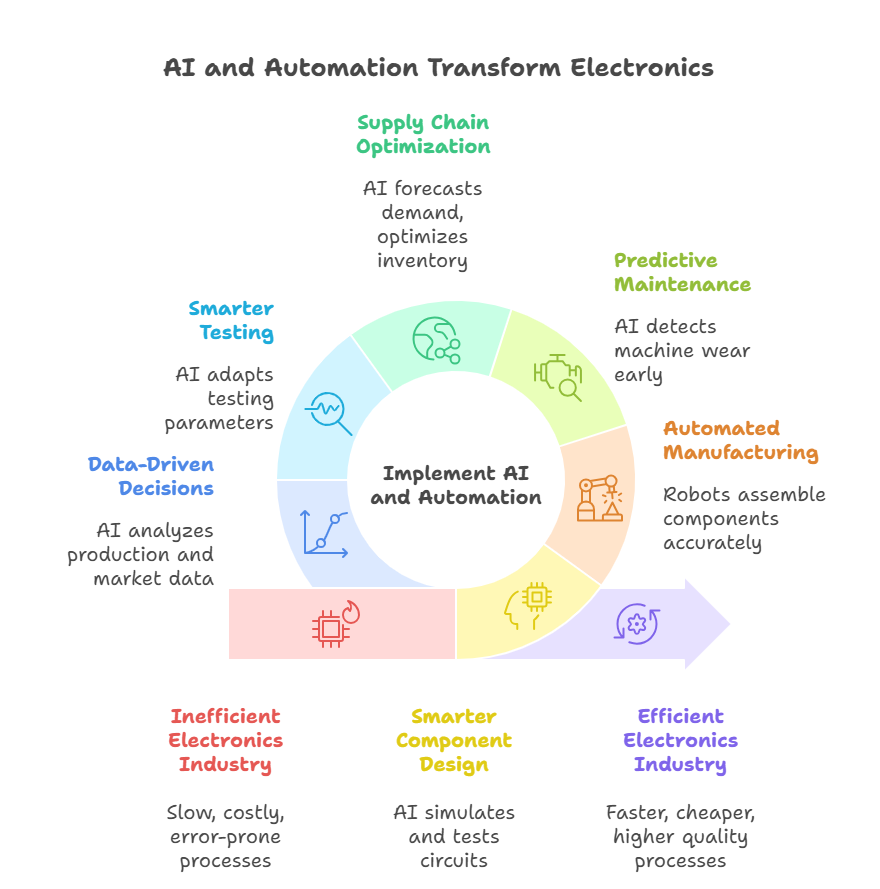
AI in electronics focuses on making processes smarter and more efficient. From predicting equipment failures to optimizing production schedules, AI is helping manufacturers make data-driven decisions. It improves everything from circuit design to final product inspection, leading to higher efficiency and reduced costs.
1. Smarter Component Design and Simulation
AI-powered design tools are helping engineers simulate and test circuits before physical prototypes are built. These systems can analyze millions of possible configurations, ensuring optimal performance while reducing design time. This not only accelerates R&D but also minimizes component waste and rework.
2. Automated Manufacturing and Assembly
Automation has revolutionized the way electronic components are assembled. Robotic arms, pick-and-place machines, and AI-controlled production lines deliver consistent accuracy and speed. This helps OEMs maintain product quality, meet large-scale demands, and ensure cost-effective manufacturing.
3. Predictive Maintenance and Quality Control
AI-driven monitoring systems can detect early signs of machine wear or potential failures. Predictive maintenance reduces downtime and avoids costly production interruptions. In quality control, automated vision systems powered by AI inspect every component for defects with precision that surpasses human capability.
4. Supply Chain Optimization
AI helps OEMs and distributors manage complex global supply chains by forecasting demand, optimizing inventory levels, and identifying potential shortages. This ensures that electronic components are available when needed, reducing lead times and improving supply reliability.
5. Smarter Testing and Calibration
Automation in testing ensures every electronic component meets design specifications. AI algorithms can adapt testing parameters in real time, identifying anomalies faster and improving product validation accuracy. This is critical for industries where precision and safety are top priorities.
6. Data-Driven Decision Making for OEMs
AI helps OEMs make smarter business decisions by analyzing real-time production and market data. This data-driven approach helps improve cost control, resource allocation, and supplier management — ensuring smoother operations and greater profitability.
Benefits of AI and Automation in the Electronics Industry
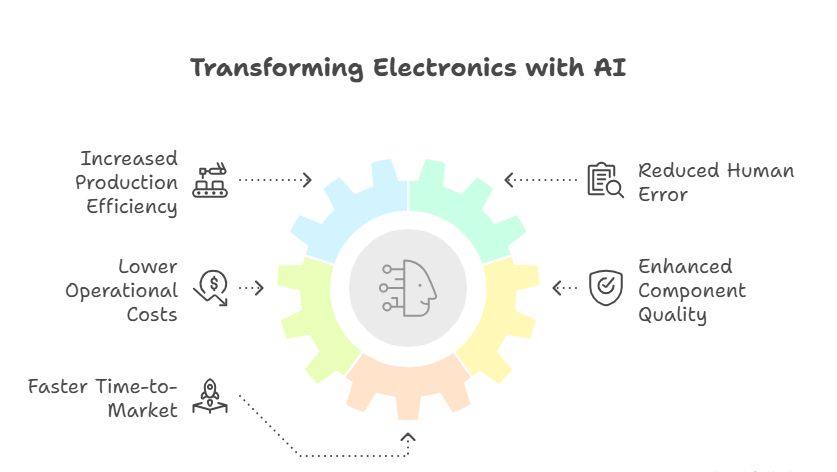
- Increased production efficiency and consistency
- Reduced human error and downtime
- Lower operational and maintenance costs
- Enhanced component quality and reliability
- Faster time-to-market for OEM products
Challenges in Adopting AI and Automation
While the advantages are clear, the transition to AI-driven systems requires investment and skilled personnel. Many small and medium OEMs face challenges in integrating these technologies with existing equipment. However, the long-term return on investment — in terms of quality, speed, and reliability — makes it worthwhile.
How DDS International – Edzeal Supports Smart Manufacturing
At DDS International – Edzeal, we empower OEMs and industrial manufacturers by supplying high-quality electronic components that fit into modern, automated production lines. From capacitors and resistors to switches and connectors, our components ensure compatibility, reliability, and performance in AI-driven manufacturing systems.
Conclusion
AI and automation are redefining the electronics industry, driving higher quality, smarter production, and greater efficiency. For OEMs, adopting these innovations — along with sourcing quality components from trusted distributors like DDS International – Edzeal — is the key to staying competitive in a fast-evolving global market.
What to read next
-

By EDZEAL | November 17, 2025
How to Maintain Component Quality During Long-Term Storage
For OEMs, manufacturers, and industrial buyers, maintaining the quality of electronic components during long-term storage is crucial. Components like capacitors, resistors, connectors, ICs, switches, and transistors can degrade over time if not stored under proper conditions. This affects production reliability, product performance, and overall cost efficiency
-
By EDZEAL | November 12, 2025
How Price Fluctuations in Electronic Components Impact OEM Production Planning
In the fast-moving electronics industry, price stability is a rare luxury. Component prices can fluctuate due to global shortages, material costs, currency shifts, and geopolitical factors. For OEMs, these price changes can significantly affect production planning, costing, and delivery schedules. Understanding how to manage and respond to these fluctuations is critical to maintaining profitability and operational stability.
-

By EDZEAL | November 8, 2025
How to Build a Reliable Supply Chain for Electronic Components
In today’s fast-paced electronics industry, a reliable supply chain is no longer optional — it’s a competitive necessity. For OEMs, manufacturers, and industrial buyers, supply chain disruptions can lead to production delays, cost overruns, and loss of customer trust. Building a strong and resilient component supply chain ensures consistent production, quality assurance, and long-term business growth.