
What is a Glass Fuse Small & Fuse Holder? Types, Uses, Sizes & Buying Guide

What is a Glass Fuse Small?
A small glass fuse is a tiny safety device used in electronic circuits. It protects your device from too much current flowing through it.
Think of it like a safety valve — when things go wrong, it breaks first so your device doesn’t.
It looks like a small glass tube with metal caps on both ends. Inside, there’s a thin wire called a filament. That wire does all the important work.
How Does a Small Glass Fuse Work?
The working principle is simple. When too much current flows through the fuse, the filament inside melts and breaks the circuit.
This stops the current immediately. Your device is safe, and you just replace the fuse.
It’s a one-time protection — once it blows, it needs to be replaced, not repaired.
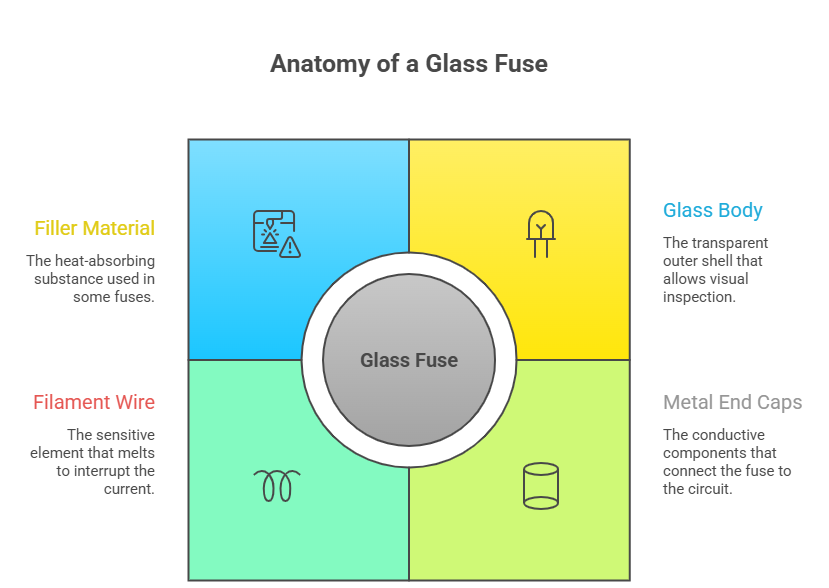
Main Components of a Glass Fuse
A small glass fuse has just a few parts, but each one matters:
- Glass body — lets you see inside and check if the fuse is blown
- Metal end caps — connect the fuse to the circuit
- Filament wire — the part that melts when current is too high
- Filler material (in some fuses) — helps absorb heat during a fault
The glass body is one of the biggest advantages. You can visually inspect it without any tools.
Why Small Glass Fuses Are Used in Electronic Circuits
Small glass fuses are used because they are:
- Compact — fit easily in tight spaces on PCBs and small devices
- Transparent — easy to check if blown without a multimeter
- Affordable — low cost makes them ideal for mass production
- Reliable — proven technology used for decades in electronics
You’ll find them in chargers, home appliances, audio equipment, and much more.
Overcurrent protection is the core job. Without a fuse, a power surge could permanently damage expensive components.
What is a Fuse Holder and Why is It Important?
A fuse holder is a small housing or socket that holds the glass fuse in place inside a circuit or device.
It keeps the fuse secure, safe, and easy to replace when needed.
Without a fuse holder, the fuse would need to be soldered directly into the circuit. That makes replacement slow, risky, and inconvenient.
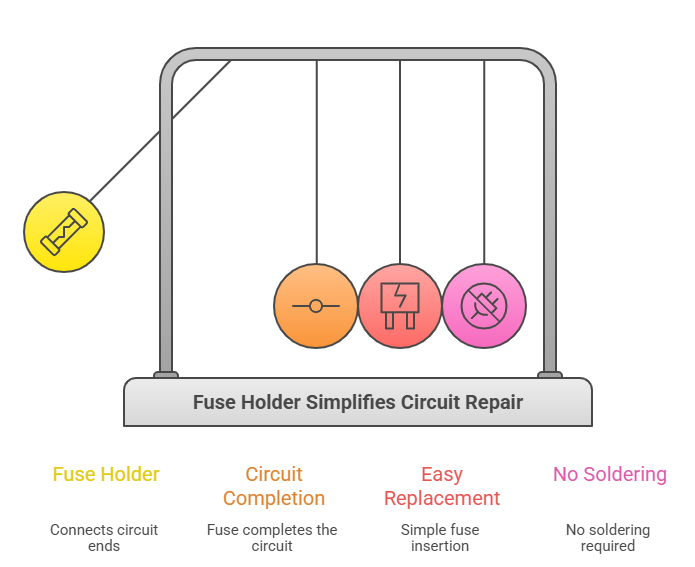
How a Fuse Holder Works with a Glass Fuse
The fuse holder connects to the circuit on both ends. You simply insert the glass fuse into the holder, and it completes the circuit.
When the fuse blows:
- Open or unscrew the fuse holder
- Pull out the old fuse
- Insert a new one of the same rating
- Done — no soldering needed
This makes maintenance fast and safe, even for beginners.
Types of Small Glass Fuse Holders
There are three main types. Each is designed for a specific use case.
PCB Mount Fuse Holder
This type is soldered directly onto a printed circuit board (PCB).
- Compact and space-saving
- Great for consumer electronics and appliances
- Keeps the fuse protected inside the device
Inline Fuse Holder
An inline fuse holder sits along a wire, usually in automotive or power supply setups.
- Easy to access from outside the device
- Common in car audio, LED strips, and battery-powered systems
- Often used when the fuse needs frequent checking or replacement
Panel Mount Fuse Holder
This type is fixed onto the front or back panel of a device.
- Allows fuse replacement without opening the device
- Common in industrial equipment, amplifiers, and power tools
- The fuse holder price for panel mount types is slightly higher due to the secure locking design
Choosing the right fuse holder type depends on where and how often the fuse needs to be accessed.
Small Glass Fuse Sizes Explained
Size matters when it comes to glass fuses. Using the wrong size can damage your device or fail to protect it.
Always check the original fuse size before buying a replacement.
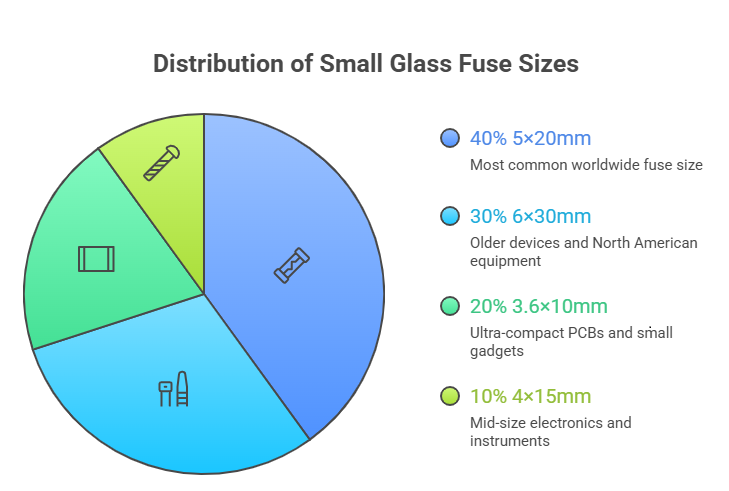
Common Small Glass Fuse Sizes
Here are the most widely used small glass fuse sizes:
| Size | Diameter x Length | Common Use |
|---|---|---|
| 5×20mm | 5mm × 20mm | Most common worldwide — used in electronics, appliances |
| 6×30mm | 6mm × 30mm | Older devices, North American equipment |
| 3.6×10mm | 3.6mm × 10mm | Ultra-compact PCBs, small gadgets |
| 4×15mm | 4mm × 15mm | Mid-size electronics, instruments |
The 5×20mm is the most popular small glass fuse size globally.
Glass Fuse Small Size Chart
A quick visual guide to help you identify your fuse:
- Mini / Subminiature — 3.6×10mm → used in very compact devices
- Small / Standard — 5×20mm → most common size for everyday electronics
- Short Body — slight variation of standard → fits specific holders
- Large / Big Size — 6×30mm → older or heavy-duty equipment
When searching for glass fuses near me or online, always note the exact dimensions first.
Difference Between Mini, Short and Standard Glass Fuses
This confuses a lot of buyers. Here’s a simple breakdown:
- Glass fuse mini → smaller body, used in compact PCBs and low-power devices
- Glass fuse short → same diameter as standard but shorter in length; fits specific holders
- Standard → the most common size, works with most fuse holders
Never assume all glass fuses are interchangeable. Even a few millimeters difference can mean the fuse won’t fit or make proper contact.
Always match: size + amp rating + voltage rating.
Types of Glass Fuses (Small vs Other Fuse Types)
Not all fuses are made the same. Understanding the difference helps you pick the right one.
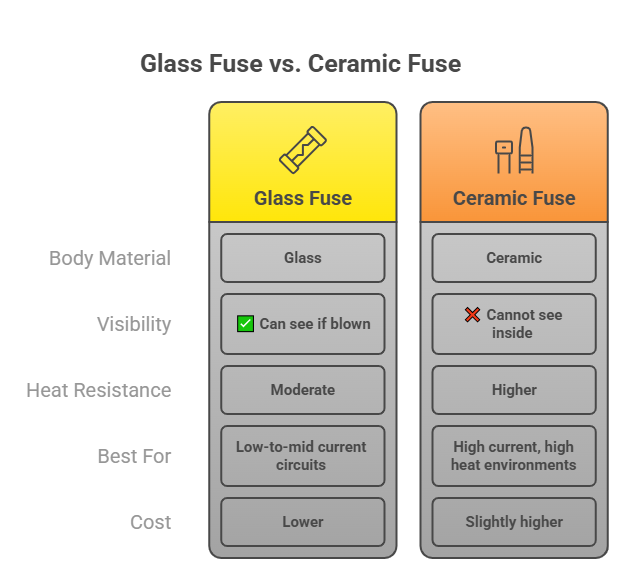
Glass Fuse vs Ceramic Fuse
| Feature | Glass Fuse | Ceramic Fuse |
|---|---|---|
| Body Material | Glass | Ceramic |
| Visibility | Can see if blown | Cannot see inside |
| Heat Resistance | Moderate | Higher |
| Best For | Low-to-mid current circuits | High current, high heat environments |
| Cost | Lower | Slightly higher |
Use a glass fuse small when you need easy visual inspection. Use ceramic when high heat or high current is involved.
Small Glass Fuse vs Blade Fuse
| Feature | Small Glass Fuse | Blade Fuse |
|---|---|---|
| Shape | Cylindrical tube | Flat plastic blade |
| Common Use | Electronics, appliances | Automotive (cars, trucks) |
| Replacement | Needs matching holder | Plug-and-play in fuse box |
| Visibility | Transparent body | Partially visible |
Blade fuses are common in cars. Glass fuses are more common in home electronics and PCBs.
Glass Fuse vs Cartridge Fuse
Cartridge fuses are similar in shape but built for higher voltage and industrial use.
- Glass fuse small → low voltage, consumer electronics
- Cartridge fuse → industrial panels, high-power systems
For most everyday electronics, a small glass fuse is the right and more affordable choice.
Applications of Small Glass Fuses
Small glass fuses are everywhere — you just don’t always notice them.
Consumer Electronics
Glass fuses protect devices like:
- Televisions and monitors
- Audio amplifiers and speakers
- Microwave ovens and kitchen appliances
These devices draw varying current loads, so overcurrent protection is critical.
Chargers & Power Supplies
Almost every switching power supply or adapter uses a glass fuse internally.
It’s the first line of defense if:
- Voltage spikes occur
- A short circuit happens inside the adapter
- The connected device draws too much current
Automotive Electronics
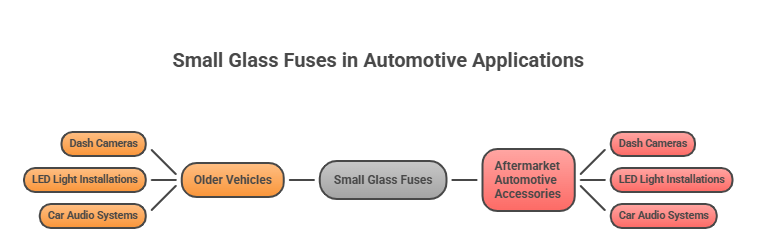
Small glass fuses are used in older vehicles and aftermarket automotive accessories like:
- Dash cameras
- LED light installations
- Car audio systems
Modern cars use blade fuses, but glass fuses still appear in custom setups and older models.
PCB & Industrial Equipment
On PCBs (printed circuit boards), glass fuse small holders are soldered in to protect sensitive components.
Industries that rely on them include:
- Telecommunications equipment
- Medical devices (low-voltage monitoring tools)
- Testing and measurement instruments
Glass fuse use in industrial PCBs is growing because they’re compact, reliable, and easy to replace during maintenance.
How to Choose the Right Small Glass Fuse & Fuse Holder
Picking the wrong fuse is a common and costly mistake. Here’s how to get it right every time.
Check the Amp Rating
The amp rating tells you how much current the fuse can handle before it blows.
- Too low → fuse blows unnecessarily during normal use
- Too high → fuse won’t blow in time, and your device gets damaged
Always match the amp rating to what the original fuse or device manual specifies.
Common ratings for small glass fuses: 0.5A, 1A, 2A, 3A, 5A, 10A
Voltage Compatibility
Every fuse has a maximum voltage rating — it must be equal to or higher than your circuit’s voltage.
- Most small glass fuses are rated for 32V, 125V, or 250V
- Using a fuse with a lower voltage rating than your circuit is dangerous
Always check both — amp rating AND voltage rating.
Selecting the Correct Fuse Size
Use this quick checklist:
- Measure the original fuse (length × diameter)
- Check if it’s a glass fuse mini, short body, or standard size
- Confirm it fits your existing fuse holder
- Never use a bigger fuse to “fix” a repeatedly blowing fuse — find the root cause
Choosing a Compatible Fuse Holder
The fuse holder must physically match the fuse size.
- A 5×20mm fuse needs a 5×20mm fuse holder
- Check if you need PCB mount, inline, or panel mount type
- Look for holders with secure contacts — loose holders cause heat and failure
A good small glass fuse holder protects both the fuse and the circuit around it.
Glass Fuse Holder Price & Buying Factors
Fuse holder price varies based on type, material, and quantity. Here’s what affects the cost.
What Affects Fuse Holder Price?
- Mount type — panel mount holders cost more than basic PCB types
- Current rating — higher amp holders need stronger materials
- Brand and certification — UL or RoHS certified holders cost more but are safer
- Quantity — bulk orders significantly reduce per-unit cost
For most DIY or repair use, basic holders are affordable and widely available.
Brass vs Plastic Holder Materials
| Material | Pros | Cons |
|---|---|---|
| Brass contacts | Better conductivity, durable | Slightly more expensive |
| Plastic body | Lightweight, insulating | Lower heat tolerance |
| Full metal | Maximum durability | Heavier, higher cost |
Brass-contact holders are the preferred choice for reliability, especially in high-use applications.
Bulk Purchase for OEM & Industrial Buyers
If you’re buying for manufacturing or industrial use:
- Order in lots of 100, 500, or 1000+ for better pricing
- Request RoHS-compliant or UL-listed fuse holders for safety compliance
- Many suppliers offer custom packaging, ratings, and branding for OEM orders
Buying in bulk can reduce fuse holder price by 30–60% per unit.
Common Problems with Small Glass Fuses
Even simple components can cause big problems. Here’s what to watch for.
Why Does a Glass Fuse Blow?
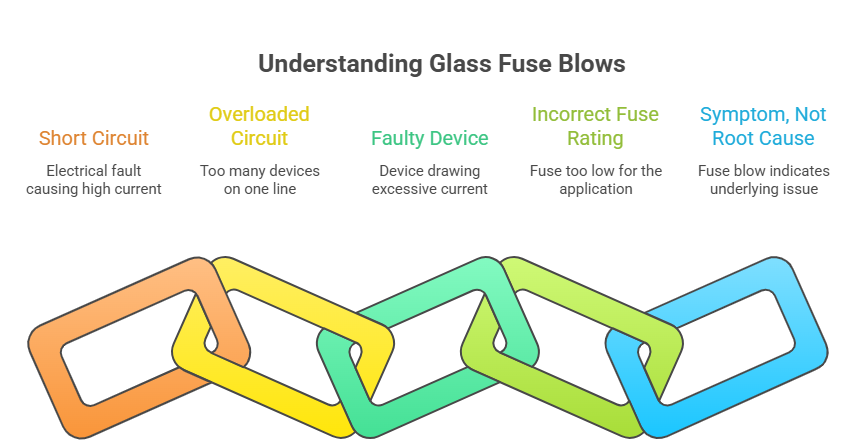
A glass fuse blows when the current exceeds its amp rating. Common causes:
- Short circuit in the connected device or wiring
- Overloaded circuit — too many devices on one line
- Faulty device drawing more current than normal
- Incorrect fuse rating — too low for the application
A glass fuse short (blown fuse) is often a symptom, not the root cause. Always investigate before replacing.
Signs of a Damaged Fuse
The glass body makes this easy to check:
- Black or dark smudge inside → blown due to a short circuit
- Broken filament visible → blown due to overcurrent
- Cloudy or discolored glass → heat damage over time
- No visible filament → severely blown
Use a multimeter in continuity mode to confirm if you’re unsure.
Can You Replace a Glass Fuse Yourself?
Yes — replacing a small glass fuse is one of the easiest DIY repairs.
Steps:
- Turn off and unplug the device
- Locate the fuse holder
- Remove the blown fuse
- Insert a new fuse with the same size and amp rating
- Power the device back on
If the new fuse blows immediately, stop. There’s a deeper electrical problem that needs professional attention.
Where to Buy Glass Fuses & Fuse Holders
You have plenty of options — both online and offline.
Online vs Offline Buying
| Factor | Online | Offline / Local Store |
|---|---|---|
| Price | Usually lower, bulk options | Higher per unit |
| Variety | Wide range of sizes and ratings | Limited stock |
| Convenience | Delivered to door | Immediate availability |
| Verification | Check reviews and specs carefully | Can physically inspect |
Searching for glass fuses near me works well for urgent replacements. For variety and better pricing, online is usually the smarter choice.
How to Choose a Reliable Supplier
Look for these before buying:
- Clear product specifications (size, amp, voltage rating listed)
- Customer reviews with photos
- RoHS or UL certification mentioned
- Return policy in case of wrong size
- Bulk pricing available if you need multiple units
A reliable supplier saves you time, money, and the risk of getting the wrong fuse.
FAQs About Small Glass Fuses & Fuse Holders
What is a glass fuse used for?
A glass fuse is used to protect electronic circuits from overcurrent. When too much current flows, the fuse blows and breaks the circuit — keeping your device safe from damage.
What size is a small glass fuse?
The most common small glass fuse size is 5×20mm (5mm diameter, 20mm long). Other sizes include 3.6×10mm (mini) and 6×30mm (standard/large). Always check your device manual or measure the original fuse before buying.
Are glass fuses reusable?
No. Once a glass fuse blows, it must be replaced. It is a one-time protection device. Never try to repair or bypass a blown fuse.
How do I know if my glass fuse is blown?
Look through the glass body:
- Broken or missing filament → blown
- Dark or blackened inside → blown due to short circuit
- Still unsure? Test with a multimeter on continuity mode — no beep means it’s blown.
Fuse holder price depends on type and material. Basic PCB mount holders can cost very little per piece, especially in bulk. Panel mount and inline holders with brass contacts cost more. Always factor in material quality and certification when comparing prices — cheapest isn’t always safest.
To Learn More About Glass Fuse Small And fuse holder Visit Wikipedia
What to read next
-

By EDZEAL | June 6, 2026
Mylar Speakers 40mm Magnet, 29mm & 27mm Magnet – Complete Buying Guide
What Are Mylar Speakers? What Is a Mylar Speaker? A mylar speaker is a small, lightweight speaker that uses a thin plastic film — called Mylar — as its diaphragm.
-

By EDZEAL | May 30, 2026
Zener Diode vs Normal Diode: Which One is Better for Electronics?
When you build an electronic circuit, every component matters. Choosing the wrong diode can damage your circuit or make it stop working altogether. Two diodes often cause confusion — the
-

By EDZEAL | May 9, 2026
Potentiometer Explained: Uses, Types, Cost & Buying Guide for OEM Buyers
You have turned a volume knob. You have adjusted a fan speed. You have dimmed a light in your room. Every single time you did that — a potentiometer was